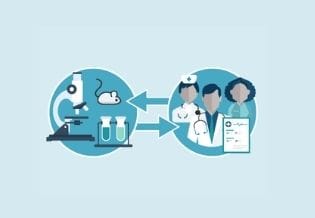
About the International Journal of Translational Research
Accelerating the pathway from bench to bedside through rigorous peer-reviewed translational science — connecting preclinical discovery, mechanistic insight, and biomarker validation to inform therapeutic development and clinical application.
IJTR operates at the critical interface where mechanistic discovery meets therapeutic potential. We prioritize studies that elucidate disease mechanisms, establish translational models, identify and validate biomarkers, and demonstrate proof-of-concept for novel interventions at the preclinical stage. Our editorial framework supports researchers navigating the complex pathway from molecular insight to application-ready science.
Each manuscript undergoes specialized review by experts in translational methodology, model validation, biomarker science, and experimental therapeutics. Reviewers assess reproducibility, mechanistic clarity, translational relevance, and methodological rigor — ensuring published work meets the highest standards for preclinical research excellence.
IJTR publishes translational investigations across multiple scientific domains, maintaining focus on mechanistic understanding and preclinical validation that informs therapeutic development.
Development and validation of in vitro, ex vivo, and in vivo disease models; mechanistic pathway analysis; disease mechanism elucidation; model system optimization.
Identification of molecular, cellular, and imaging biomarkers; biomarker validation studies; predictive and prognostic marker development; translational biomarker platforms.
Target identification and validation; compound screening; pharmacokinetics and pharmacodynamics; preclinical efficacy and safety studies; drug delivery systems.
Gene therapy approaches; cell-based therapies; protein therapeutics; nucleic acid therapeutics; mechanism-based intervention strategies.
Novel assay development; high-throughput screening platforms; imaging technologies; computational modeling; organ-on-chip systems.
Pharmacogenomics; molecular profiling; precision medicine biomarkers; patient stratification approaches; companion diagnostics development.
IJTR's editorial board comprises distinguished translational scientists, molecular biologists, pharmaceutical researchers, and disease modeling experts who bring specialized expertise across therapeutic areas and methodological approaches. Our single-blind peer review process emphasizes constructive feedback that strengthens scientific rigor while respecting author timelines.
Review Standards
Reviewers evaluate experimental design, model validity, mechanistic clarity, statistical methodology, reproducibility, and translational relevance.
Manuscripts must demonstrate clear methodology, appropriate controls, statistical rigor, and meaningful contribution to translational science.
Ethics requirements include institutional approvals, animal welfare compliance, and adherence to reporting standards (ARRIVE, MIQE, etc.).
Author Support
Editorial communications provide clear decision rationales, revision guidance, and timeline expectations at each stage.
Manuscript development services available for authors requiring methodological consultation or writing support.
Rapid publication pathway ensures accepted manuscripts reach the global research community within days of acceptance.
IJTR streamlines submission through our digital manuscript portal or direct email to [email protected]. Our editorial team acknowledges submissions within 72 hours and maintains transparent communication throughout the review process.
- Review IJTR's scope and author guidelines to ensure alignment with translational research focus.
- Prepare manuscript following reporting standards appropriate to study type (ARRIVE for animal studies, MIQE for qPCR, etc.).
- Submit via online portal with cover letter, conflict of interest disclosure, and ethics documentation.
- Receive editorial decision typically within 14 days; respond to reviewer feedback with point-by-point rebuttal.
- Accepted manuscripts published online within 3 days following production review and author proof approval.
All IJTR content is published under Creative Commons Attribution 4.0 International (CC BY 4.0) license, ensuring immediate global access while authors retain copyright. This open access model accelerates knowledge dissemination to researchers, pharmaceutical developers, regulatory scientists, and translational medicine specialists worldwide.
- Immediate Accessibility: Published articles freely available to global scientific community without subscription barriers.
- Enhanced Visibility: Open access increases citation rates, research impact, and cross-disciplinary collaboration opportunities.
- Copyright Retention: Authors maintain intellectual property rights while enabling broad research dissemination.
- Transparent Pricing: Competitive article processing charges with waiver programs for qualifying authors.
- Permanent Archiving: DOI assignment and preservation through multiple digital repositories ensure long-term discoverability.
IJTR content is distributed through multiple academic databases, search platforms, and institutional repositories to maximize discoverability across the translational research community. Our indexing strategy ensures published work reaches pharmaceutical researchers, academic laboratories, regulatory agencies, and technology development teams.
Current indexing includes Google Scholar, ResearchGate, Semantic Scholar, Scilit, and institutional repositories at major research universities. IJTR actively pursues additional indexing partnerships to expand research visibility and impact.
IJTR welcomes proposals for thematic collections and special issues addressing emerging areas in translational science. Investigators can submit proposals through our special issue portal or contribute to active calls via the submission page.
Current opportunities include collections focused on novel disease models, biomarker validation methodologies, translational imaging technologies, and mechanism-based therapeutics. Contact the editorial office at [email protected] to discuss collaborative publishing initiatives.
Advance Translational Science with IJTR
Submit your preclinical research, mechanistic investigations, or translational methodology studies to a journal that values scientific rigor, reproducibility, and meaningful contribution to therapeutic development. Join a global community advancing translational science from discovery to application.