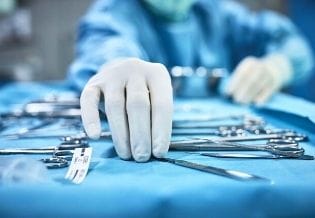
Aims & Scope
Research Scope: Tiered Framework
Surgical Instrument Engineering
Biomechanical design, materials science, and performance testing of surgical tools and devices.
- Biomechanical analysis of cutting, grasping, and suturing instruments
- Material properties and biocompatibility of surgical tools
- Ergonomic design and haptic feedback systems
- Sterilization effects on instrument durability and performance
- Force transmission and mechanical efficiency in laparoscopic tools
- Novel alloys and coatings for enhanced instrument longevity
"Finite element analysis of stress distribution in titanium surgical scissors during tissue cutting: implications for design optimization"
Robotic Surgery Systems
Engineering principles, control systems, and mechanical design of surgical robotics platforms.
- Kinematic modeling and motion control algorithms
- Master-slave manipulator design and optimization
- Sensor integration and force feedback mechanisms
- Workspace analysis and collision avoidance systems
- Actuator design for surgical robotic arms
- Teleoperation latency and control precision studies
"Development of a 7-DOF robotic manipulator with enhanced dexterity for minimally invasive procedures: mechanical design and kinematic validation"
Biomaterials for Surgical Applications
Material science research on implants, scaffolds, and biocompatible materials used in surgical contexts.
- Mechanical properties of biodegradable sutures and meshes
- Surface modification techniques for implant osseointegration
- Polymer scaffolds for tissue engineering applications
- Corrosion resistance of metallic implants in physiological environments
- Hydrogel formulations for wound closure and tissue adhesion
- Nanostructured coatings for antimicrobial surgical devices
"Characterization of tensile strength and degradation kinetics of polylactic acid sutures under simulated physiological conditions"
Minimally Invasive Technology
Engineering innovations in endoscopic, laparoscopic, and catheter-based surgical technologies.
- Optical design and image processing for endoscopic systems
- Flexible instrument mechanics and articulation mechanisms
- Pneumoperitoneum pressure dynamics and insufflation systems
- Trocar design and tissue trauma minimization
- Energy delivery systems (ultrasonic, radiofrequency, laser)
- Navigation and tracking technologies for catheter guidance
"Computational fluid dynamics analysis of CO2 flow patterns during laparoscopic insufflation: optimizing trocar placement for pressure stability"
Surgical Simulation & Training Technology
Engineering aspects of simulators, virtual reality systems, and training platforms for surgical skill development.
- Haptic feedback systems for surgical simulators
- Tissue phantom development and mechanical validation
- Computer vision algorithms for skill assessment
- Virtual reality platform architecture for procedural training
Imaging Technology Integration
Engineering research on imaging modalities used for surgical guidance and navigation (hardware/software focus).
- Intraoperative imaging system design and calibration
- Image registration algorithms for surgical navigation
- Fluorescence imaging device engineering
- Ultrasound transducer design for surgical applications
Computational Modeling
Mathematical and computational approaches to understanding surgical mechanics and device performance.
- Finite element analysis of tissue-device interactions
- Computational fluid dynamics in surgical contexts
- Machine learning for surgical workflow optimization
- Biomechanical modeling of tissue deformation
AI-Enhanced Surgical Systems
Artificial intelligence and machine learning applications in surgical device control and automation (engineering perspective only).
- Computer vision for autonomous suturing systems
- Reinforcement learning for robotic surgical task optimization
- Neural networks for instrument tracking and pose estimation
Submissions in emerging areas undergo additional editorial review to ensure alignment with biomedical science focus.
Soft Robotics & Flexible Devices
Novel compliant mechanisms and soft actuators for surgical applications.
- Pneumatic soft actuators for minimally invasive tools
- Shape memory alloy applications in surgical devices
- Continuum robot design for natural orifice surgery
Microelectromechanical Systems (MEMS)
Microscale devices and sensors for surgical applications.
- MEMS pressure sensors for surgical monitoring
- Microfluidic devices for intraoperative analysis
- Miniaturized actuators for catheter-based interventions
Explicitly Out of Scope
Clinical Case Reports
Patient-specific surgical outcomes, treatment protocols, and clinical case series are not considered. Our focus is on device engineering and biomechanics, not clinical practice.
Diagnostic Studies
Research on disease diagnosis, pathology interpretation, or clinical imaging for diagnostic purposes falls outside our scope. We focus on surgical technology, not diagnostic medicine.
Pharmacological Research
Studies on anesthesia protocols, drug delivery, or pharmaceutical interventions are not within scope unless directly related to device engineering (e.g., drug-eluting implant mechanics).
Clinical Trial Results
Randomized controlled trials, patient outcome studies, and comparative effectiveness research are outside our scope. We publish engineering research, not clinical evidence.
Healthcare Policy & Economics
Health policy analysis, cost-effectiveness studies, and healthcare system research are not considered unless they include substantial engineering or technology development components.
Article Types & Priorities
Expedited Review (14-21 days to first decision)
Regular Review (28-35 days to first decision)
Selective Acceptance (by invitation or exceptional merit)
Editorial Standards & Requirements
Reporting Guidelines
- CONSORT for device trials
- PRISMA for systematic reviews
- ARRIVE for animal studies
- STARD for diagnostic accuracy
- STROBE for observational studies
Data Transparency
- Raw data deposition encouraged
- CAD files for device designs
- Code availability for algorithms
- Material specifications documented
- Testing protocols fully described
Ethics & Compliance
- IRB approval for human subjects
- IACUC approval for animal studies
- Conflict of interest disclosure
- Funding source transparency
- Patent status declaration
Preprint Policy
- Preprints accepted (arXiv, bioRxiv)
- Must disclose preprint DOI
- No impact on peer review
- Version control maintained
- Final version linked to preprint
Publication Metrics
Ready to Submit?
If your research focuses on the engineering, biomechanics, or materials science of surgical technology—not clinical outcomes—we want to hear from you.
Contact Editorial OfficeEditor in chief